Water Damage Restoration in Paces Ferry Park, GA
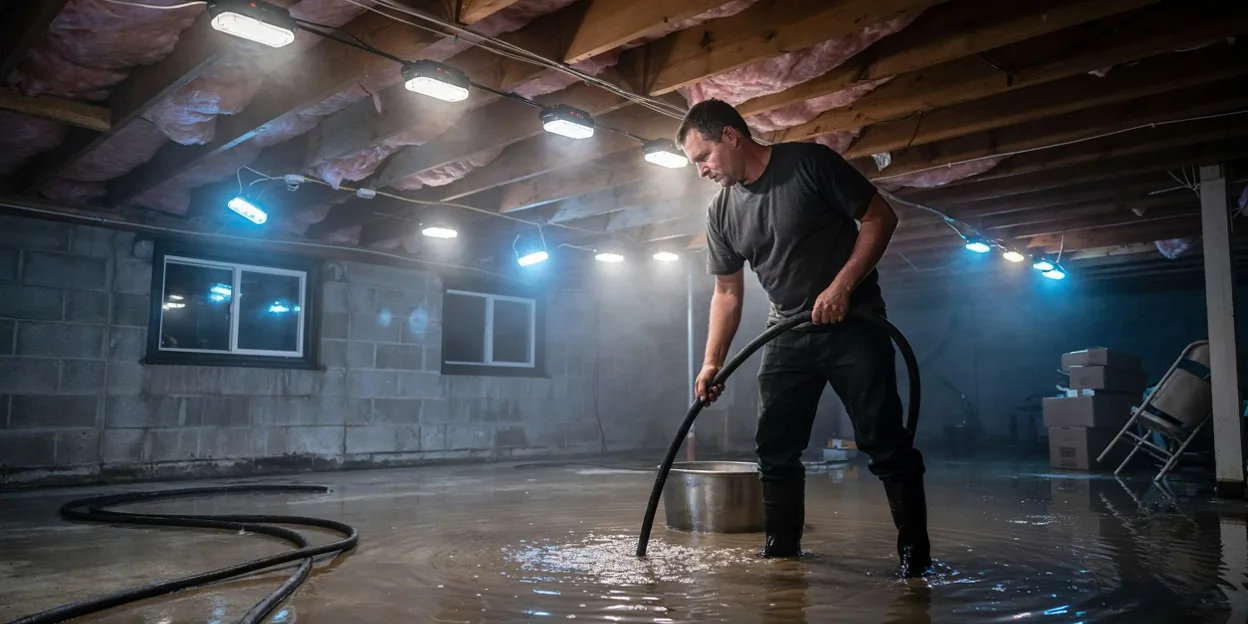
Paces Ferry Park is a subdivision of 1980s and 1990s two-story traditionals on the Vinings side of Smyrna, off Paces Ferry Road near the city line, on the hills that drop toward the Chattahoochee. The houses are brick fronts with vinyl or fiber-cement sides, many with a daylight basement on the downhill side and the water heater in the basement or the garage. It is the kind of neighborhood where the basement was finished into a media room and a guest suite in the 2000s, with carpet, drywall, and a bathroom against the block wall.
That finished basement is the loss. The downhill wall weeps at the floor joint after a week of rain, the ejector pump for the basement bath quits in a storm outage, or a supply line in the ceiling above the media room lets go. The carpet and the bottom foot of drywall hold it.
This site puts Paces Ferry Park homeowners through by phone to an independent local water damage provider. The provider meters every wall on the lower level before setting the scope.
Paces Ferry Park water damage in a finished basement
A basement that took groundwater along the back wall is a water extraction, and the drywall is cut where the readings say. A tank that failed in the basement mechanical room is water heater leak cleanup. Once the wet pad and drywall are out, structural drying runs until the block and the framing read dry.
Which desk pulls the permit
Paces Ferry Park sits close to the Smyrna city limit, and a rebuild that replaces drywall, plumbing, or wiring goes to the City of Smyrna inside the line and to Cobb County outside it. Ask the provider to confirm which side the house is on before the rebuild contractor starts. Groundwater is usually not covered by a homeowner policy, so have the crew note where the water came in.
Call (770) 830-3578 and describe the wet wall downstairs. We put you through to an independent local water damage provider serving Paces Ferry Park.
Services Available in Paces Ferry Park
Water Extraction
Standing water pulled off hardwood, tile, carpet, and slab on any floor of a Smyrna house, then the first meter readings on walls and subfloor.
Structural Drying
Air movers and dehumidifiers run against daily readings until studs, subfloor, and drywall reach their dry target in a humid Georgia house.
Crawl Space Water Extraction
Standing water pumped from under a 1950s ranch or split-level, then the joists, subfloor, and ductwork metered and dried from below.
Burst Pipe Water Damage
Cleanup after a supply line split in a crawl space, attic, or exterior wall during a hard freeze, and drying of every room the water reached.
Creek Flood Cleanup
Mud, silt, and contaminated water removed after Nickajack, Rottenwood, or Sweetwater Creek came into a lower level, with wet materials cut out and the shell dried.
Water Heater Leak Cleanup
A tank that let go in a hall closet, garage, or attic platform, with the floor, walls, and rooms below pumped out and metered.
Ceiling Water Damage Repair
A stained or sagging ceiling under a second-floor bath or an attic water heater opened, dried above, and made ready for repair.
Roof Leak Water Damage
Wet attic insulation, ceilings, and walls dried after a spring thunderstorm or straight-line winds lifted shingles and let rain inside.