Water Damage Restoration in Forest Hills, GA
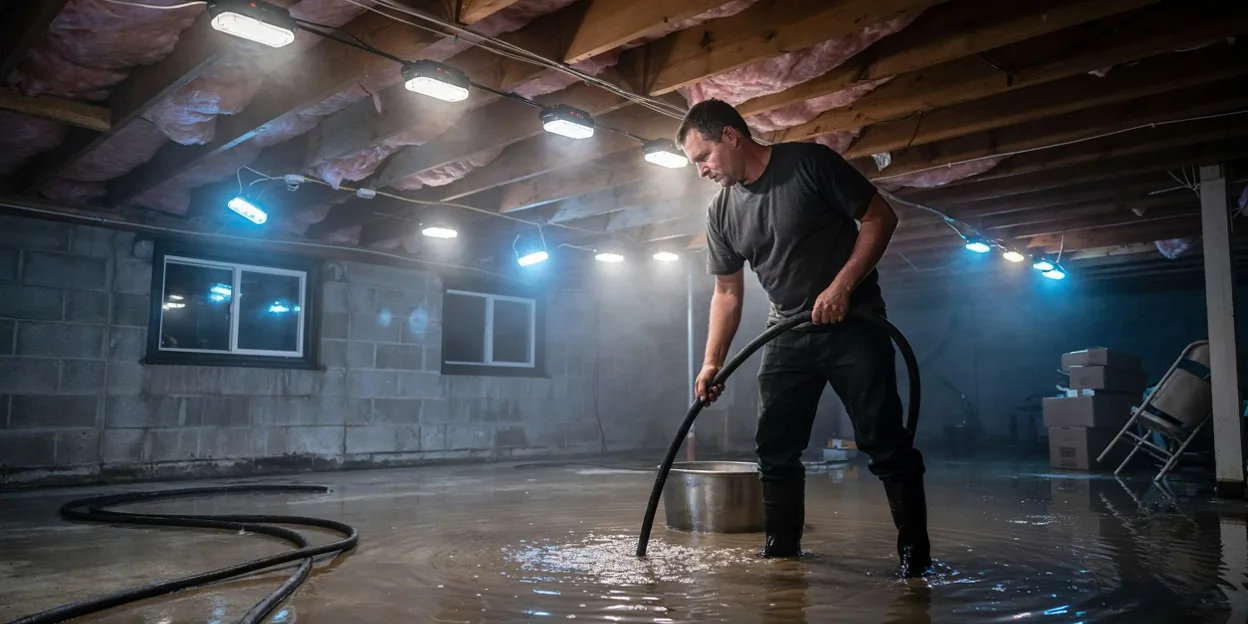
Forest Hills sits on the north side of Smyrna between Atlanta Road and Spring Road, a neighborhood of 1950s and 1960s brick ranches and split-levels on sloping lots under mature hardwoods. The split-levels are the tell: a garage and a den set half a story into the hill on the downhill side, and a crawl space under the bedrooms on the uphill side. When it rains hard, the water off the uphill yard runs along the clay and shows up in the lower den or at the base of the crawl space wall.
Forest Hills also has some of the earliest partial basements in Smyrna, block-walled rooms that were dug for a furnace and later finished into a playroom. Those rooms weep along the floor joint after a week of rain, and the carpet down there is often the first thing that smells.
This site puts Forest Hills homeowners through by phone to an independent local water damage provider. The provider meters the lower level and the crawl space before setting the scope.
Forest Hills water damage on a sloping lot
A lower den that took water along the downhill wall is a water extraction, and the crew meters every wall on that level, not just the wet one. A crawl space with standing water after a storm is a crawl space water extraction. A ceiling stain under the upstairs bath in a raised ranch is ceiling water damage repair.
Where Forest Hills families go when the den is off limits
The Smyrna branch of the Cobb County Public Library system, a fifteen-branch network headquartered in Marietta, is a short drive down Atlanta Road, and it is where a lot of homework gets done during the week the family room is full of air movers. Rebuild permits for drywall and wiring in the lower level go through the City of Smyrna.
Call (770) 830-3578 and describe what is on the floor downstairs. We put you through to an independent local water damage provider serving Forest Hills.
Services Available in Forest Hills
Water Extraction
Standing water pulled off hardwood, tile, carpet, and slab on any floor of a Smyrna house, then the first meter readings on walls and subfloor.
Structural Drying
Air movers and dehumidifiers run against daily readings until studs, subfloor, and drywall reach their dry target in a humid Georgia house.
Crawl Space Water Extraction
Standing water pumped from under a 1950s ranch or split-level, then the joists, subfloor, and ductwork metered and dried from below.
Burst Pipe Water Damage
Cleanup after a supply line split in a crawl space, attic, or exterior wall during a hard freeze, and drying of every room the water reached.
Creek Flood Cleanup
Mud, silt, and contaminated water removed after Nickajack, Rottenwood, or Sweetwater Creek came into a lower level, with wet materials cut out and the shell dried.
Water Heater Leak Cleanup
A tank that let go in a hall closet, garage, or attic platform, with the floor, walls, and rooms below pumped out and metered.
Ceiling Water Damage Repair
A stained or sagging ceiling under a second-floor bath or an attic water heater opened, dried above, and made ready for repair.
Roof Leak Water Damage
Wet attic insulation, ceilings, and walls dried after a spring thunderstorm or straight-line winds lifted shingles and let rain inside.