Water Heater Leak Cleanup in Smyrna, GA
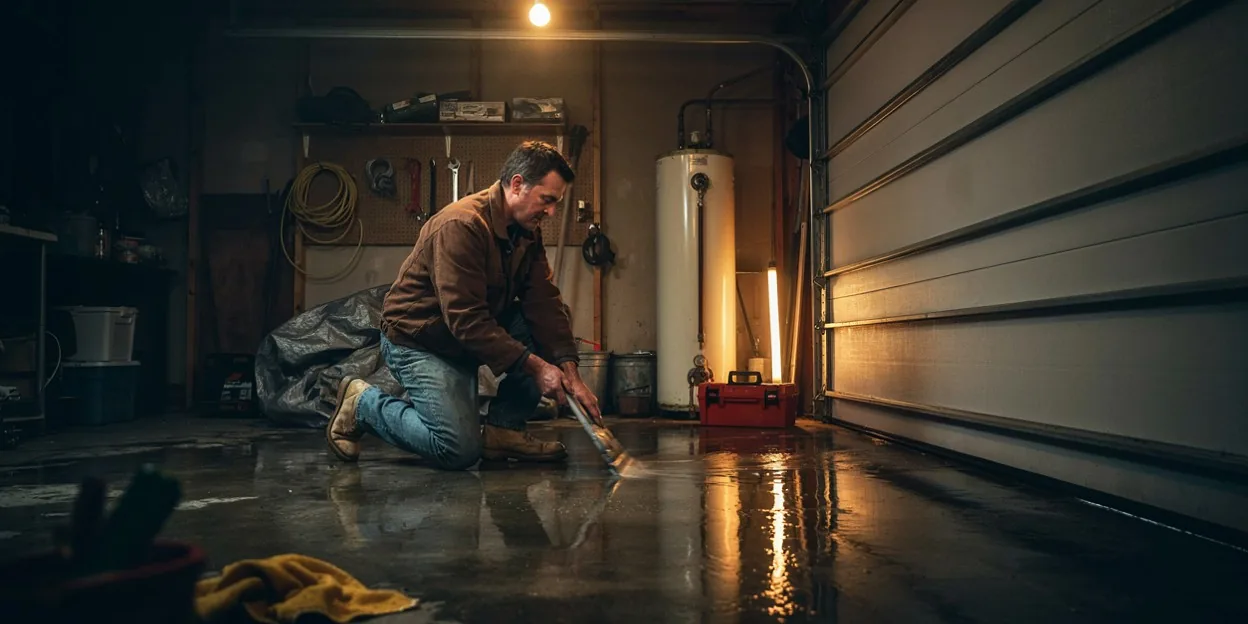
The shower went cold on a Tuesday morning, and when you opened the hall closet to look at the water heater the carpet in front of it was black with water. The tank had been weeping from a rusted seam for who knows how long, the closet floor was soft, and the hardwood in the hall had gone dark for three feet in every direction. This site puts you through to an independent local provider who cleans up after water heater failures in Smyrna and across south Cobb.
Where the water heater sits in a Smyrna house, and why it matters
In a 1950s or 1960s Smyrna ranch the tank is in a hall closet, a utility room off the kitchen, or the garage, sitting on the slab or on the subfloor over the crawl space. In a townhome built since 2000 it is on a platform in the attic, above the second-floor hallway, with a drain pan under it that handles a drip and nothing more. A tank holds 40 or 50 gallons, and when the bottom rusts through it lets all of that go at once, then keeps running on the supply line until someone closes the valve. Where it sits decides where the water goes: down through the subfloor into the crawl space, across the garage into the wall, or through two floors of ceiling.
What the crew does when the tank has let go
The crew extracts the standing water, pulls the wet pad, and meters the floor, the base of the closet walls, and the rooms on the other side of those walls. For a ranch, they go under the house to check whether the water came through the subfloor onto the clay. For an attic tank, they open the ceiling below the platform at the low spot, pull the soaked insulation, and meter the wall cavities the water ran down inside. The plumber replaces the tank while the crew works; the two jobs run side by side.
What to do while you wait
Close the cold supply valve on top of the tank, or the valve at the meter if that one is stuck. Turn off the breaker for an electric heater or the gas valve for a gas one. Do not stand under a wet ceiling. Pull rugs and get furniture off the wet floor, and photograph the closet, the floor, and any ceiling stain before anything moves. Say on the call where the tank is, because an attic tank is a different first hour than a closet tank.
Floors, walls, and ceilings after a tank failure
The water is clean, so time is the question. Hardwood that is dried in the first days often recovers; laminate and particleboard shelving do not. The closet subfloor is metered and usually dries in place unless the tank wept for months and rotted it. Drywall that reads wet at the base is cut, and a ceiling under an attic tank is opened and dried above before anyone patches it, which is ceiling water damage repair. If the water went through the floor of a ranch, crawl space water extraction gets it off the clay before structural drying runs.
Attic tanks, hall closets, and a slow leak nobody saw
Smyrna's older stock puts the tank low, where a failure soaks the floor and the crawl space under it, and its newer stock puts the tank high, where a failure soaks everything below. The attic tank is the harder loss: the drain pan overflows, the water runs across the ceiling joists, finds the top plate of a wall, and comes out three rooms away as a stain on a second-floor ceiling or a wet stripe down a first-floor wall. Cobb water is moderately hard, and a tank in a Smyrna house that is past ten years is living on borrowed time.
The other common failure is not a burst at all. A tank weeps from a seam or a fitting for months, the closet carpet stays a little damp, and the subfloor and the joists under it rot quietly until the floor gives. That one is found late, and more of the floor comes out because of it.
A sudden tank failure is often covered under a homeowner policy; a slow leak that ran for months often is not, and the tank itself usually is not either. Nobody here has read your policy, and this site promises nothing about what it pays. The crew's photos and readings from the first visit are the record your adjuster works from.
Calling about a failed water heater
Say where the tank is, whether the supply is shut off, and which floors got wet. Mention a stained ceiling or a soft floor. Keep the property address and a number we can call back within reach. Call (770) 830-3578.