Water Extraction in Smyrna, GA
The braided line under the kitchen sink let go on a Friday while you were at a game in Cumberland, and it ran until Sunday night. The kitchen tile is under water, the hardwood in the dining room has gone dark at the seams, and there is a steady drip through the floor register into the crawl space. This site puts you through to an independent local provider who extracts water from houses in Smyrna and across south Cobb.
Getting the bulk water off the floor before the wood takes it
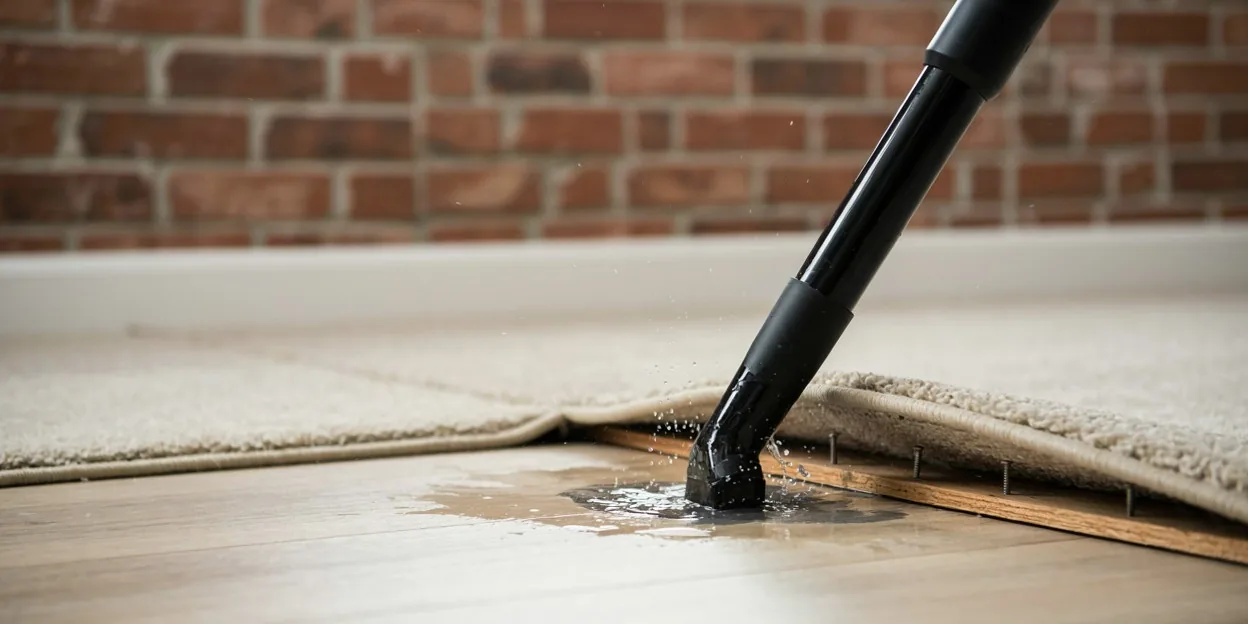
Extraction is the part of the job that has to happen fast, because every hour the water stands it sinks deeper into the subfloor, the toe kicks, and the bottom of the walls. The crew brings a truck-mounted or portable extractor and pulls the standing water off tile, hardwood, carpet, and slab. On carpet they use a weighted tool that squeezes the pad through the carpet, which recovers far more than a shop vac.
Then they take the first readings on every surface the water could have reached: the hardwood at the seams, the subfloor from the crawl space below, the drywall at the base of each wall, and the cabinet bases in the kitchen. Those numbers are the map for the drying that follows.
What to do in the hour before the truck pulls up
Close the valve at the meter box by the curb if the water is coming from a pipe. Kill the breaker for any room where water has reached the outlets. Pull up rugs, get furniture legs onto foil or blocks, and move anything cardboard to a dry room. Open the cabinet doors under the sink. Take pictures of every room as you found it, and again once things are moved. If water is dripping into the crawl space, do not go under the house; say so on the call so the provider brings the pump.
Hardwood that lies back down, and laminate that does not
Supply water is clean, so the question is only how long it ran. Hardwood that is extracted and dried from above and below in the first days often lies back flat. Subfloor and framing usually dry in place. Drywall that reads wet at the base is cut a foot or two up, and the insulation behind it comes out, because it will not dry inside the wall. Laminate almost always comes out; the core swells and does not go back. Carpet often survives once the pad is gone. When the bulk water is off the floor, structural drying is the rest of the job.
Water from a toilet overflow, a floor drain, or a creek is a different category, and the crew treats it that way. Carpet, pad, and drywall it touched come out rather than dry. Say where the water came from when you call.
How water moves through a Smyrna house
Most houses in Smyrna's older neighborhoods went up between the early 1950s and the late 1960s as brick ranches and split-levels over a vented crawl space, and the newer stock along Atlanta Road and Spring Road is three-story townhomes on slabs. In a ranch, water on the main floor finds the gaps at the registers and the plumbing chases and ends up on the clay under the house, so the extraction is not done until someone has looked under the floor. In a townhome, a leak on the third floor lands on two floors of finished space, and the extraction starts at the bottom and works up.
A pipe that split during the December 2022 freeze in a crawl space or attic is a burst pipe water damage job with extraction as the first step. Water that came up from the yard after a week of storms like September 2009 is a creek flood cleanup, and the extraction there begins with the mud.
A sudden pipe failure is often covered under a homeowner policy; a slow drip under a sink for months usually is not. Nobody here has read your policy, and this site promises nothing about what it pays. Ask the crew to log every reading and photo from day one; that log is what the adjuster reads.
What to say when you call about the water
Say which floor is wet, where the water came from, and whether it has stopped. Mention if it is dripping into the crawl space or through a ceiling. Keep the property address and a number we can call back within reach. Call (770) 830-3578.